Styling
How to Choose Jewellery for Sarees, Kurtis & Western Outfits
The same piece of jewellery can feel traditional, modern or quietly polished depending on the clothes around it. Instead of matching every detail, look at the outfit's neckline, fabric, colour, level of ornament and occasion. These practical combinations can help you create a clear focal point while keeping the whole look balanced.
Begin with the outfit's visual weight
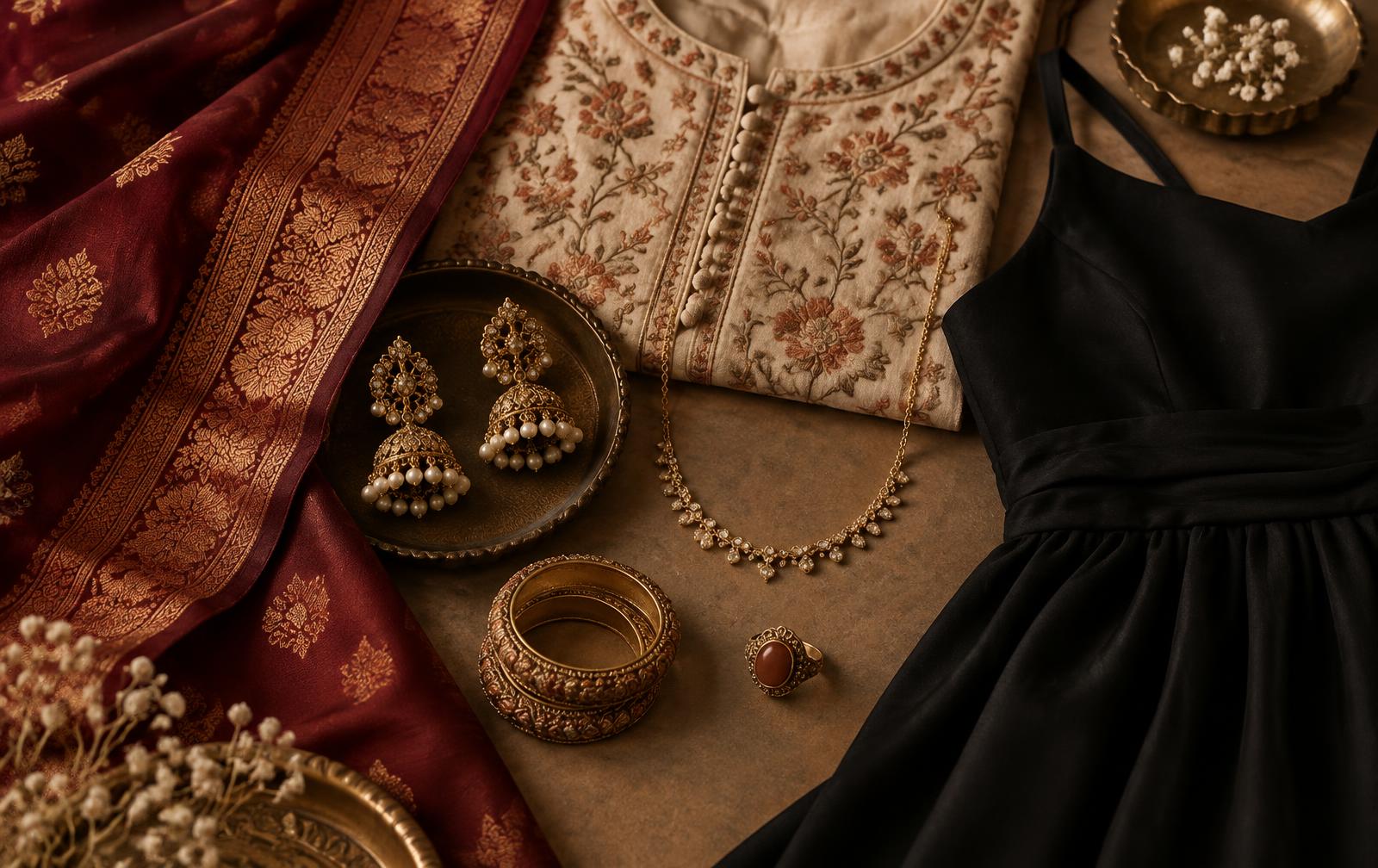
Before choosing jewellery, notice where the outfit already draws attention. Embroidery, prints, pleats, borders, sequins and dramatic sleeves all add visual detail. A richly worked outfit may need only one defined jewellery moment, while a plain fabric creates room for a fuller necklace, larger earrings or a deliberate bangle stack.
Then consider the neckline and hairstyle. An open neckline gives a necklace space to sit clearly; a high or decorated neckline may be better supported by earrings and a ring. Hair worn up reveals drops and jhumkas, while loose hair can soften their impact. Comfort and the length of the occasion should guide the final scale.
Jewellery with sarees
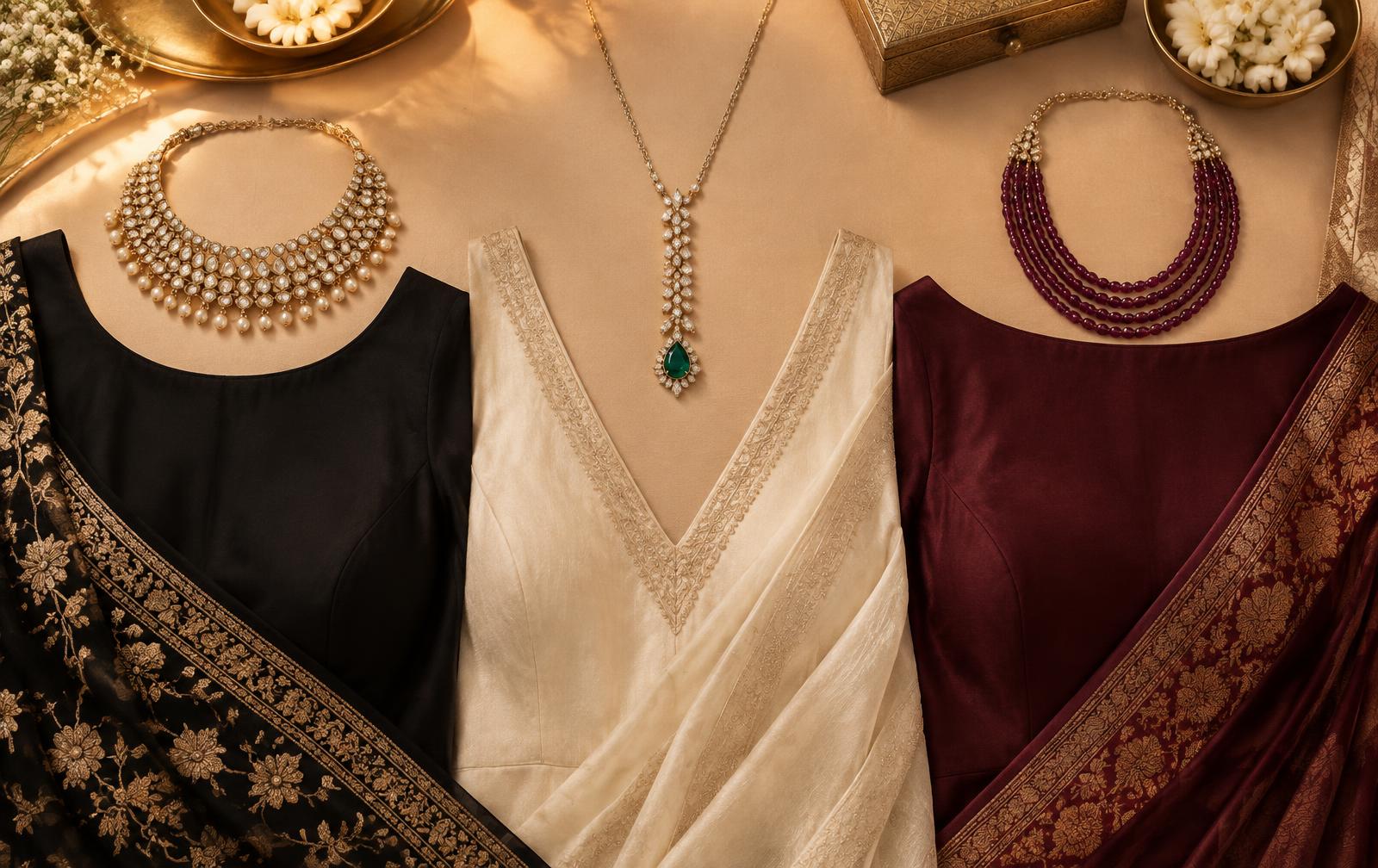
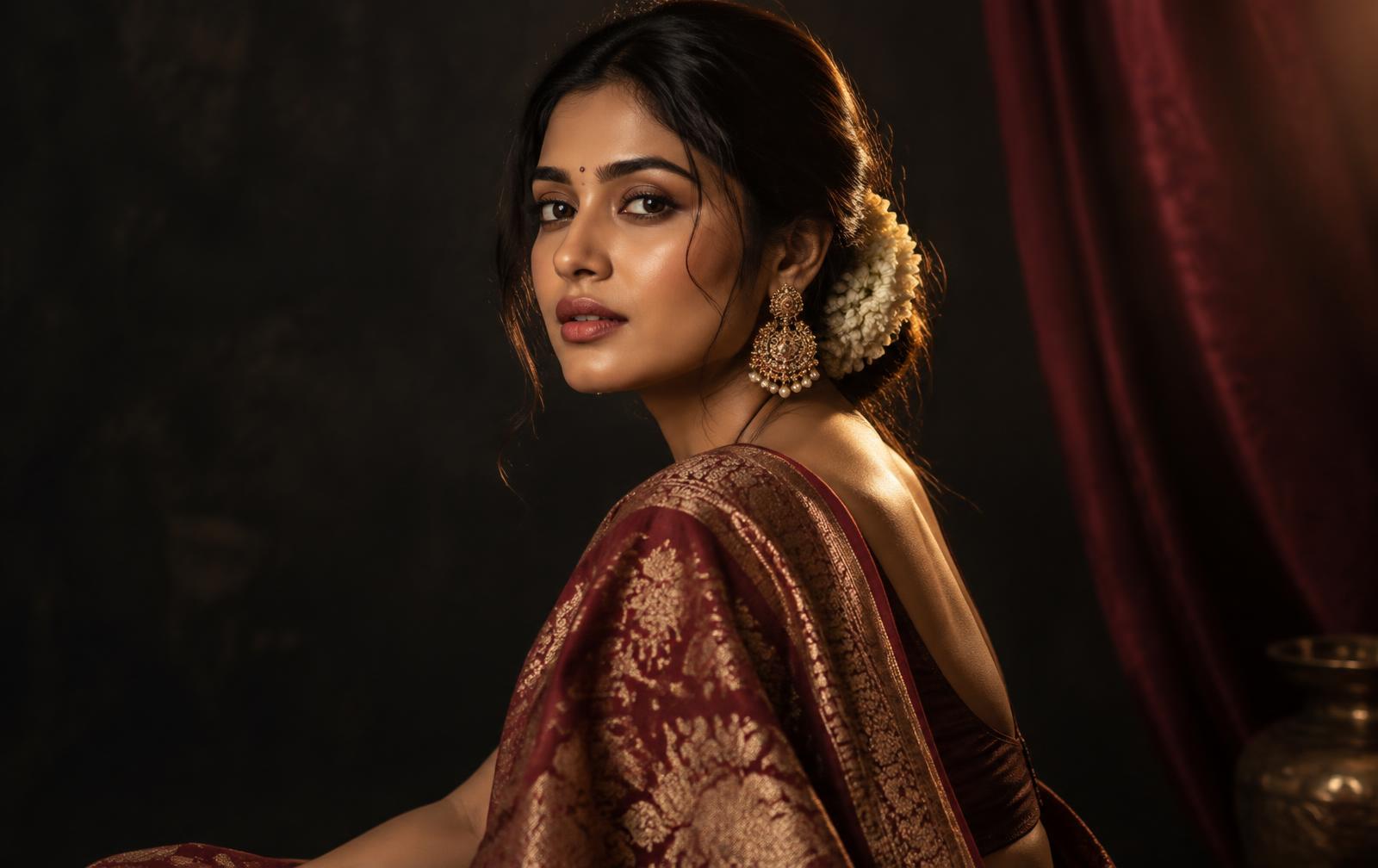
Let the saree's border and blouse guide the emphasis. With an ornate border or embellished blouse, try statement earrings with a restrained necklace—or leave the neck clear altogether. With a simple saree and clean blouse, a broader necklace or layered effect can become the centre of the look.
For a graceful daytime combination, pair a softly draped saree with medium jhumkas, one bangle or a small stack, and a ring. For an evening event, choose either a stronger necklace with quieter earrings or expressive earrings with a simpler neck. The goal is not to match every motif, but to repeat one quality such as curve, colour or level of detail.
Pay attention to the pallu and blouse neckline together. A necklace should remain visible rather than becoming caught between fabric edges. When the drape carries much of the ornament near the shoulder, earrings and wrist jewellery can distribute attention more evenly.
Kurtis and everyday ethnic wear
Kurtis are flexible enough for both quiet and expressive jewellery. A straight or high neckline works well with medium earrings, a pendant worn over the fabric, or a longer necklace that creates a vertical line. A V or open neckline can frame a shorter necklace or light pendant naturally.
For work or daytime errands, choose one comfortable feature: compact jhumkas, a fine necklace, a single bangle or a ring. For dinner or a family gathering, increase the scale of that one feature rather than adding several unrelated pieces. A printed kurti often needs less jewellery than a plain one because the pattern already contributes movement and colour.
With a dupatta, test the full outfit before deciding on a necklace. If the fabric sits close to the neck or carries heavy detailing, earrings and bangles may remain more visible and easier to wear throughout the day.
Festive and occasion outfits
Festive dressing can support more jewellery, but a clear hierarchy still makes the look feel considered. Choose a leading area—the face, neckline or wrists—and let the other pieces echo it at a quieter scale. For example, full jhumkas can lead with a light necklace and one ring, while a detailed necklace can lead with smaller earrings.
Look at the outfit from a normal viewing distance. If the fabric, earrings, necklace and bangles all demand equal attention, remove or simplify one area. Repeating one tone or rounded shape can create connection without requiring a perfectly matched set.
Practical details matter during long celebrations. Check earring weight, make sure bangles do not catch on embroidery, and confirm that a necklace stays clear of the neckline as you move. A look that remains comfortable will appear more effortless.
Dresses and polished western outfits
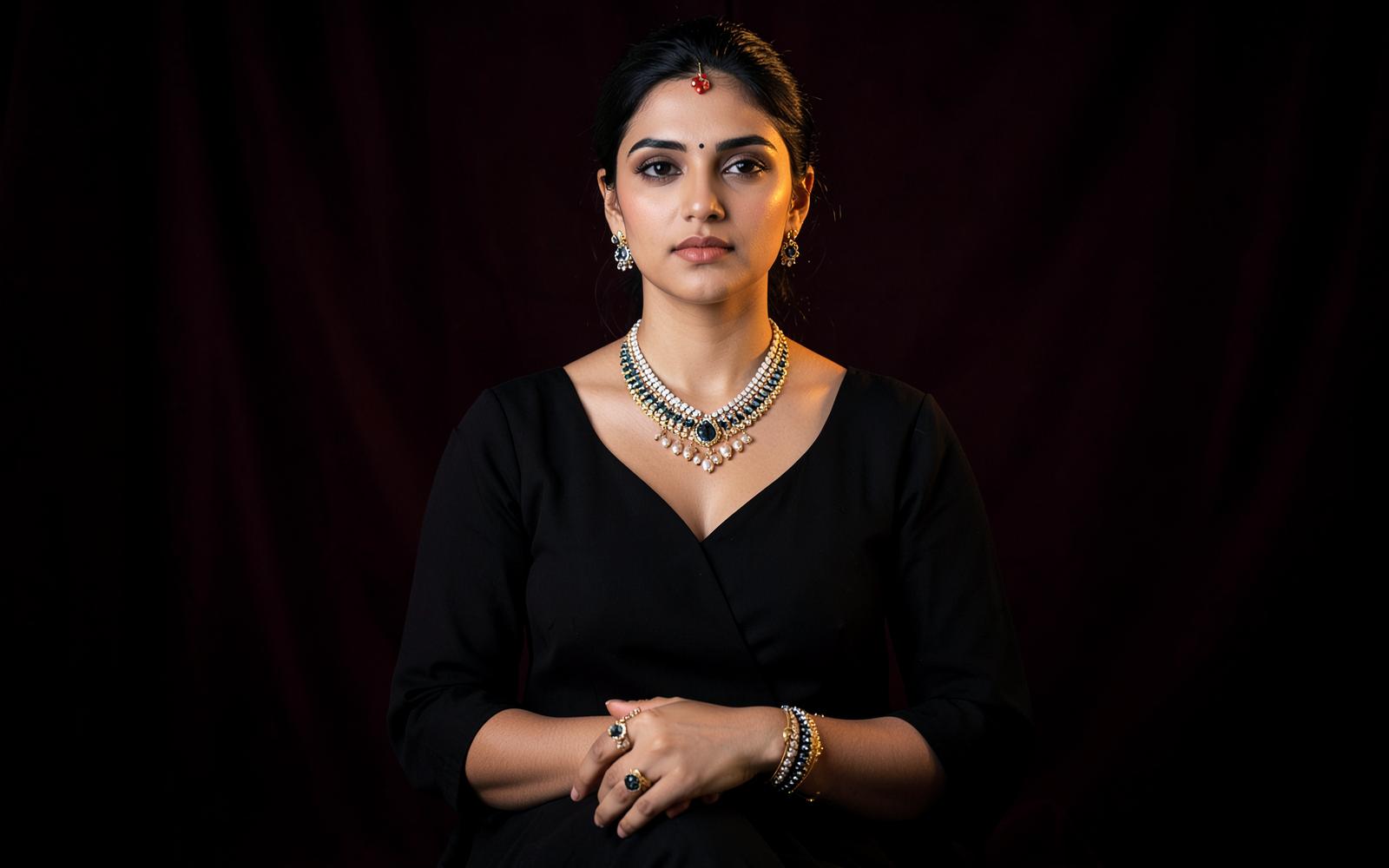
With a solid-colour dress, jewellery can introduce texture and character. A V-neck dress can frame a pendant, while a wide or strapless neckline leaves space for a collar-style or statement necklace. High necks often pair cleanly with earrings and a cuff or ring instead.
Indian-inspired earrings can create a striking contrast with a simple black, maroon or neutral dress. Keep the rest of the styling intentional: large jhumkas may need no necklace, while a light necklace can be paired with smaller earrings. Tailored jackets and shirts work well with a pendant inside an open collar or a longer necklace over a plain front.
For a more minimal result, choose one repeated line. Rounded earrings can soften angular tailoring; a slender necklace can echo the vertical opening of a shirt; a single ring can add detail without changing the clean character of the outfit.
Casual western outfits
Everyday combinations such as a plain top with jeans, a relaxed shirt or a simple knit are useful backgrounds for jewellery. Small drops, compact jhumkas, a light pendant or one bangle can make the outfit feel finished without becoming formal.
For a modern mix, pair one traditional-shaped piece with otherwise simple clothing. Medium jhumkas with a crisp shirt, or a decorative ring with a monochrome top, can feel deliberate because the contrast is clear. If the outfit includes prints, hardware or a detailed collar, choose jewellery that occupies a different area rather than competing directly beside it.
Party and evening looks
Evening lighting can support stronger silhouettes, but balance remains useful. With a sleek dress or jumpsuit, try long earrings and an uncluttered neckline, or choose a central necklace with compact earrings. A ring or bracelet can complete the look without filling every available space.
When the outfit itself has shine, texture or embellishment, focus on shape rather than adding more surface detail. Clean drops, a defined bangle or a single ring can provide structure. With a very simple party outfit, a larger jewellery piece can supply the drama.
A practical final check
- Choose one focal area, then make the remaining pieces quieter.
- Check necklace length against the actual neckline and drape.
- Try earrings with the hairstyle you will wear.
- Use jewellery to complement one colour or shape rather than matching every detail.
- Photograph the complete outfit to judge its balance from a normal distance.
- Remove anything that catches, feels heavy or distracts you from enjoying the occasion.