Styling
How to Choose Jewellery for Weddings as a Guest
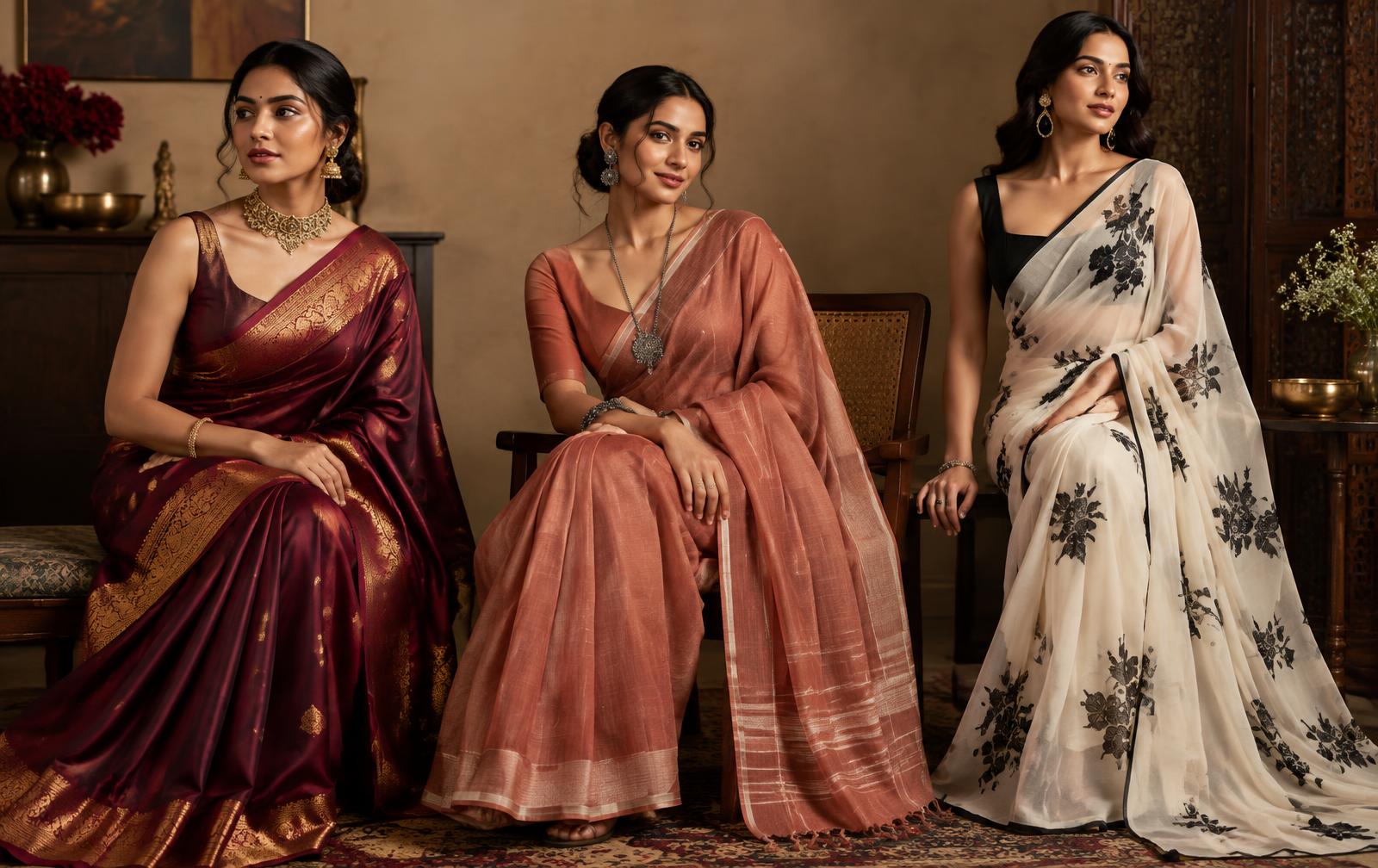
Indian weddings invite colour, detail and celebration, but guest jewellery still benefits from a clear point of view. The aim is not to fill every available space. Consider the time of day, the function, your outfit's visual weight and how long you will wear the look, then choose jewellery that supports rather than overwhelms it.
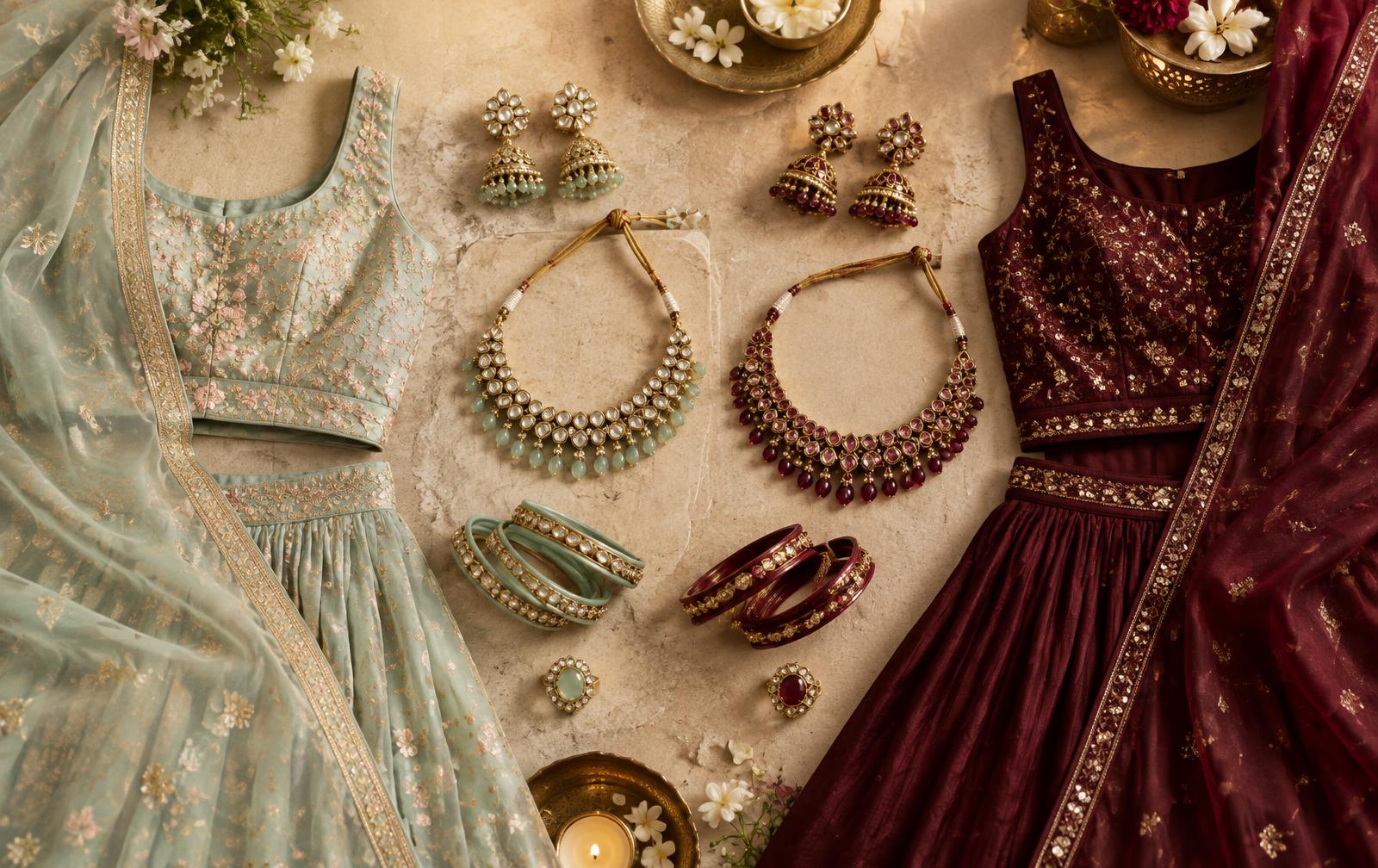
Start with the outfit, not a complete set
Look first at the neckline, blouse, border, embroidery and drape. If detail is concentrated near the face, earrings may be enough. If the upper area is simple, a necklace can provide the main structure.
Matching every piece perfectly is optional. Repeating one colour, curve or level of ornament often looks more considered than wearing a full set at equal scale.
Day weddings
Natural light often makes colour and fine detail especially visible. Medium earrings, a light necklace, one ring and a restrained bangle arrangement can create a graceful daytime look without feeling underdressed.
Pastels, soft neutrals and brighter daytime colours can be paired through either harmony or contrast. Check the complete outfit outdoors or near a window because jewellery may appear different from how it looks under warm indoor lighting.
Mehendi and relaxed celebrations
Mehendi functions can involve movement and close interaction, so practical wrist and hand styling matters. If your hands will be decorated, consider keeping rings minimal and placing more emphasis on earrings or a necklace. Bangles should not interfere with sleeves or planned activities.
Floral prints and colourful outfits already carry visual movement. Choose one jewellery area to lead rather than adding equal detail at the ears, neck and wrists.
Sangeet and reception-style evenings
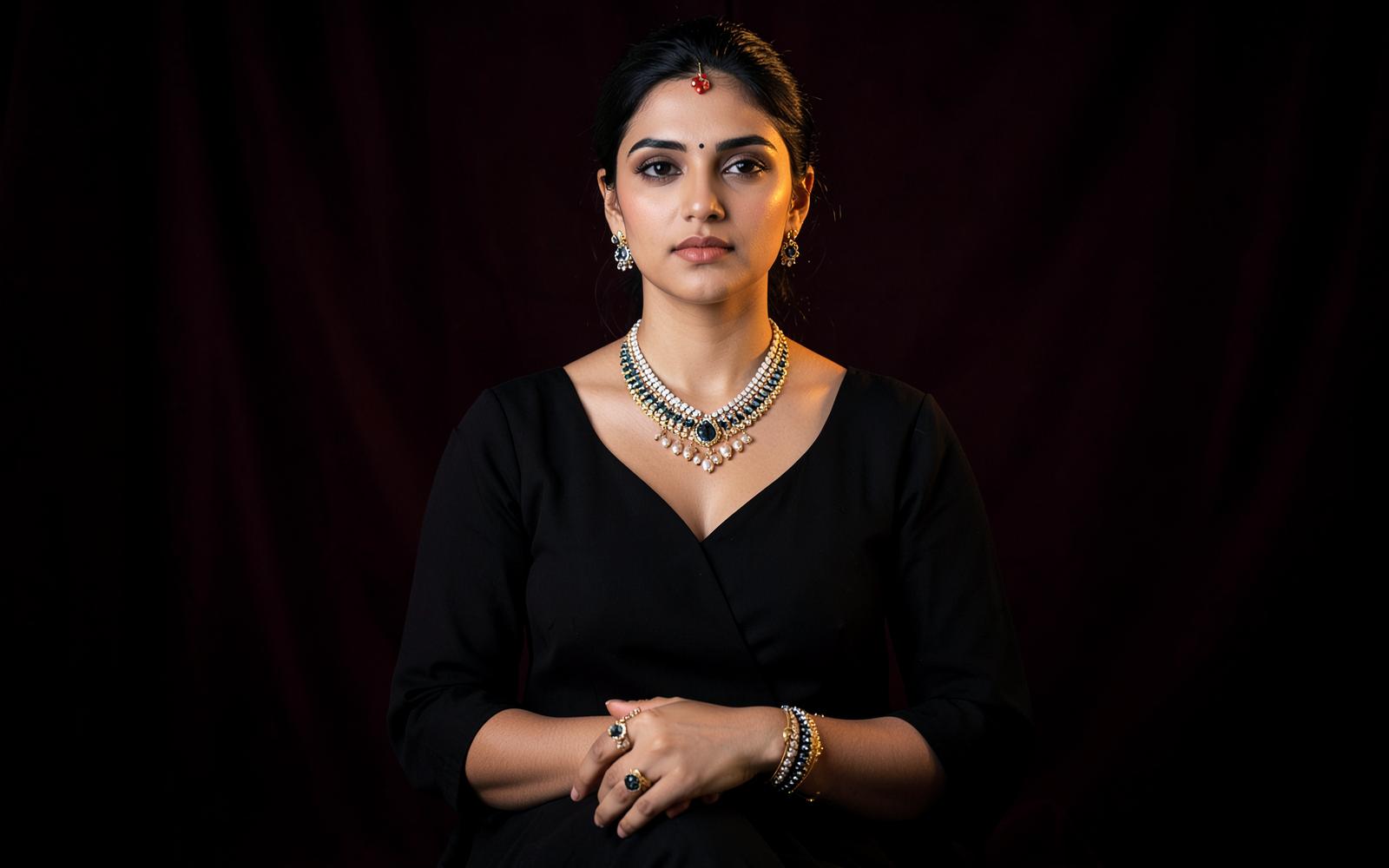
Evening events can support stronger silhouettes. Statement earrings with an open neckline, or a defined necklace with smaller earrings, can hold their presence under indoor lighting. A ring or bangle stack can add a second point of interest without competing beside the face.
For dancing, test movement before leaving. Secure closures, comfortable weight and pieces that stay clear of hair and fabric will make the look easier to enjoy.
Balance heavily detailed outfits
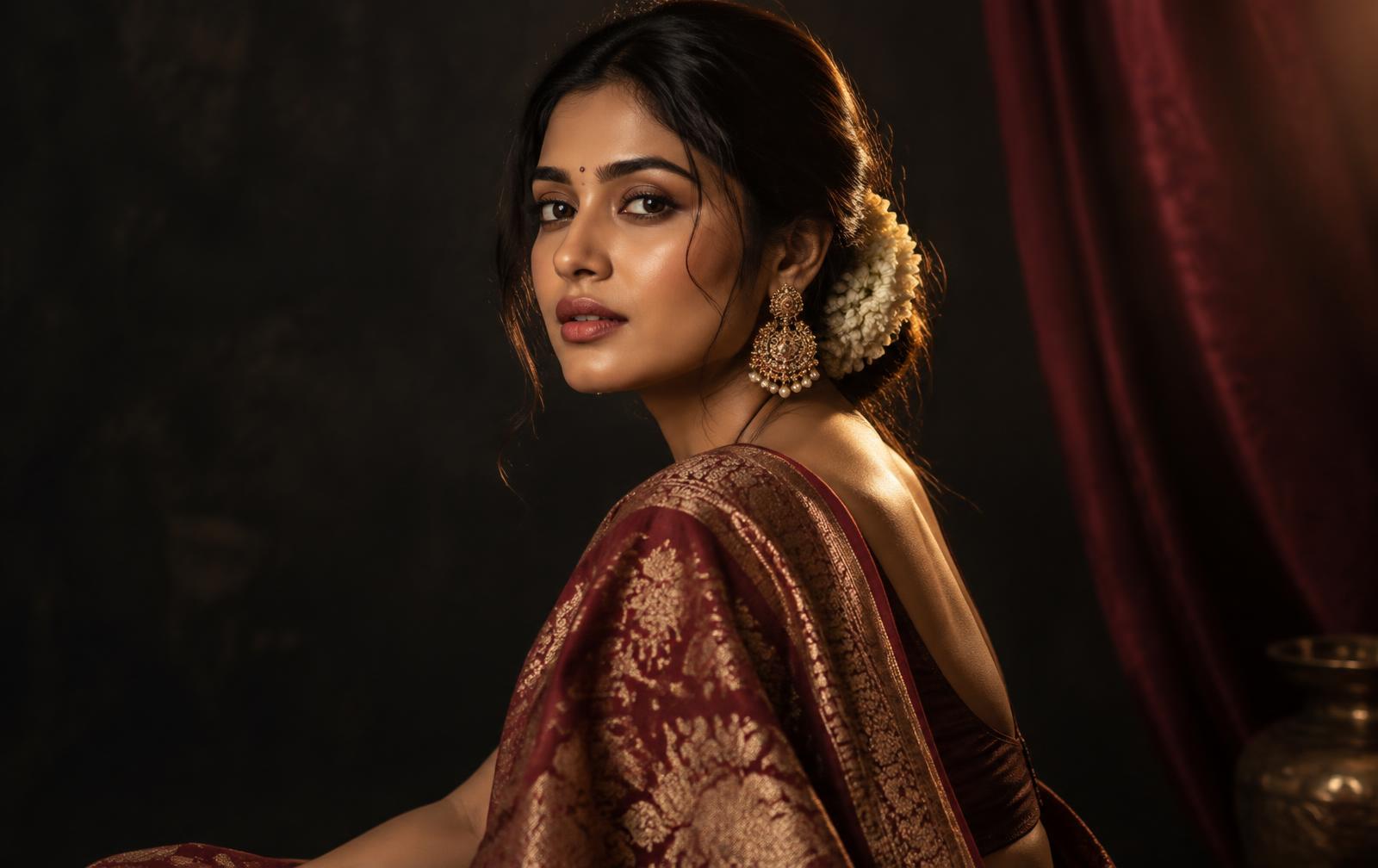
With an embroidered blouse, ornate dupatta or richly bordered saree, identify where the detail is strongest. Leave that area some breathing room. A decorated high neckline may need only earrings; a heavily worked shoulder drape can be balanced with jewellery at the opposite wrist.
Avoid assuming that a festive outfit always requires a large necklace. Bare space can make both the clothing and the jewellery look more intentional.
Give simpler outfits a focal point
A plain saree, clean lehenga blouse, understated kurta set or solid dress offers room for a broader necklace, expressive jhumkas or a deliberate stack. Select one focus, then echo a small tone or motif elsewhere.
If you are attending several functions, change the focal area rather than buying or packing a completely separate jewellery set for each outfit.
Before you leave
- Try the jewellery with the finished hairstyle and drape.
- Check clasps and comfort before a long event.
- Keep necklaces clear of embroidery and dupatta edges.
- Carry removed pieces in individual pouches, never loose in a bag.
- Choose the combination that lets you move and celebrate comfortably.