Styling
How to Choose Jewellery for Your Skin Tone
Skin-tone guidance can help you notice why certain jewellery colours feel especially harmonious, but it should never become a rulebook. Undertone is only one part of a look: clothing, lighting, makeup, contrast and personal preference all matter. Use these ideas as an invitation to experiment, then choose the colours that make you feel most like yourself.
Skin tone and undertone are different
Skin tone describes the visible depth of your complexion, while undertone describes the subtle warmth, coolness or balance beneath it. People with very different skin tones can share the same undertone, and the appearance of both can shift with sunlight, clothing and makeup.
Jewellery advice usually refers to undertone because metal colour sits directly beside the skin. Even so, the effect is visual rather than absolute. A strong contrast may be exactly what you want, while a more harmonious tone can feel softer and quieter.
Simple ways to explore your undertone
Look at your skin in indirect daylight rather than under a strongly yellow or blue bulb. Some people notice that the veins at the wrist appear more green, which can suggest warmth, or more blue or violet, which can suggest coolness. If the colour is difficult to read, your undertone may be neutral—or the vein method may simply be inconclusive for you.
You can also compare an ivory fabric with a clear white fabric beside your face, or hold gold-tone and silver-tone jewellery near the jawline. Notice which creates gentle harmony and which creates sharper contrast. Neither result is better. The exercise is useful because it shows the visual effect you may want to repeat.
Warm undertones
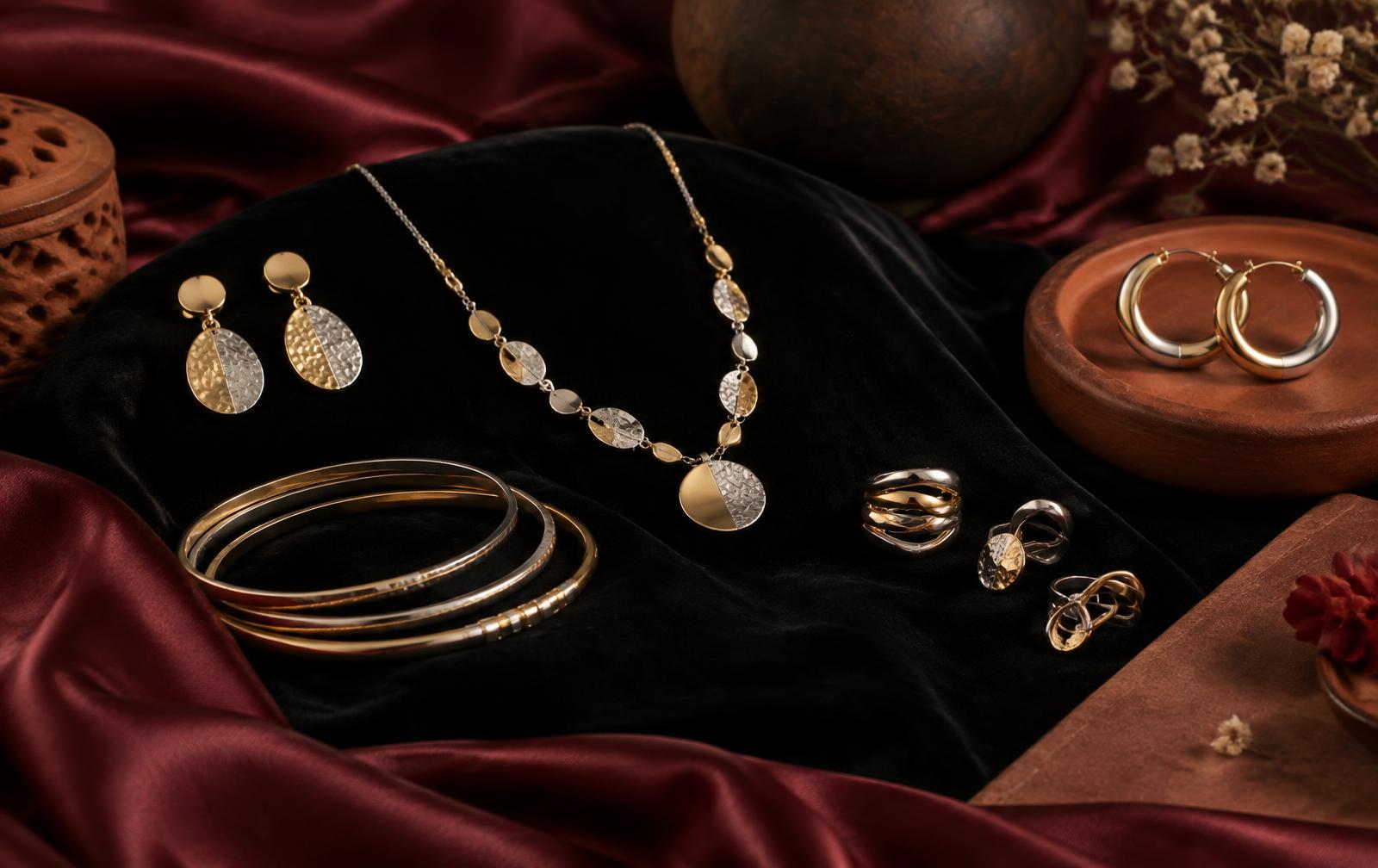
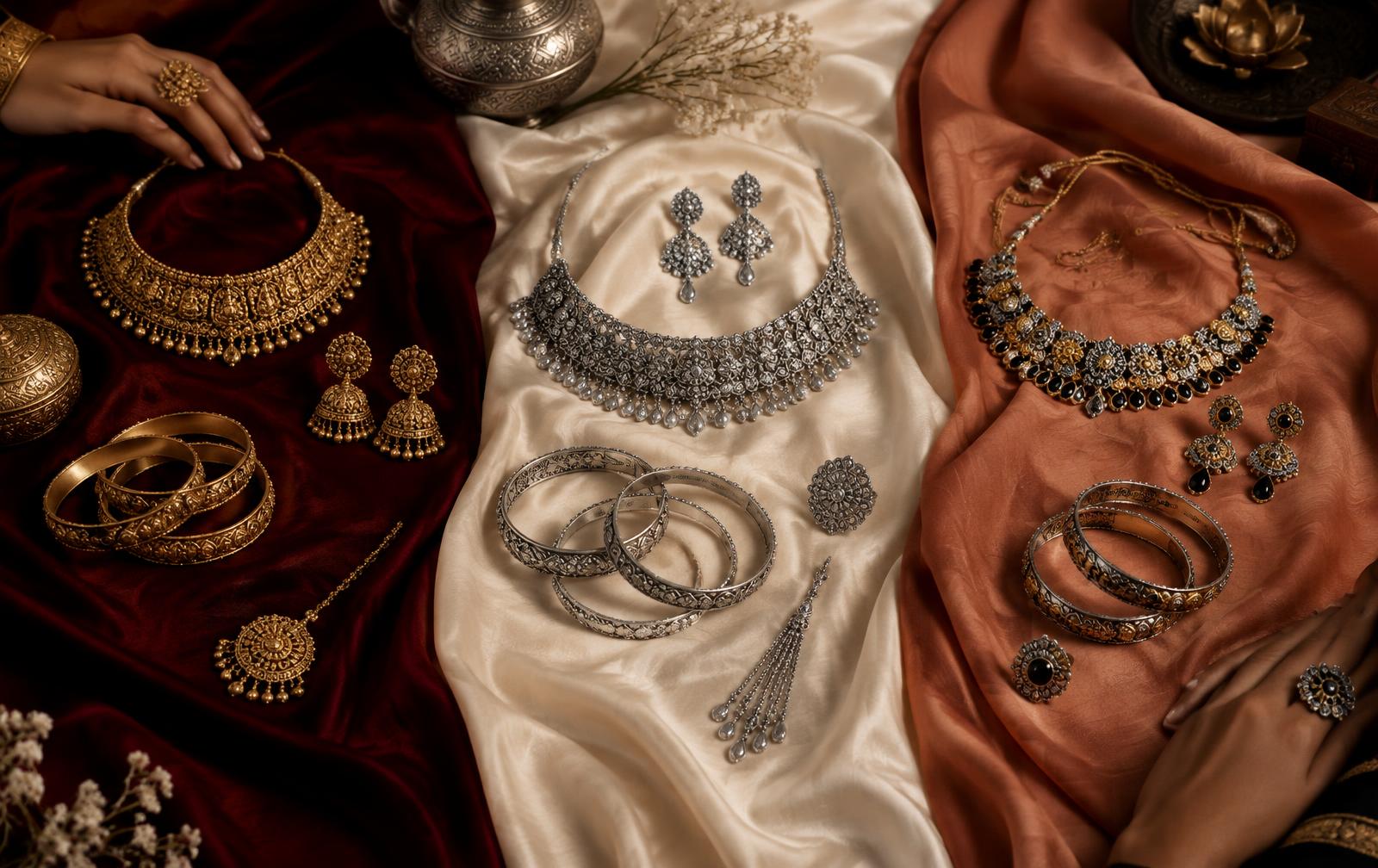
Warm undertones often have golden, peach or olive qualities. Gold-tone, antique-brass and coppery colours can echo that warmth and create an easy, blended effect. Terracotta, maroon, mustard, cream and warm green clothing can reinforce the same direction.
For contrast, try a cooler silver-tone piece against a warm outfit or complexion. Keeping the silhouette simple can make that contrast look deliberate rather than disconnected. Mixed-tone jewellery can also bridge both directions naturally.
Cool undertones
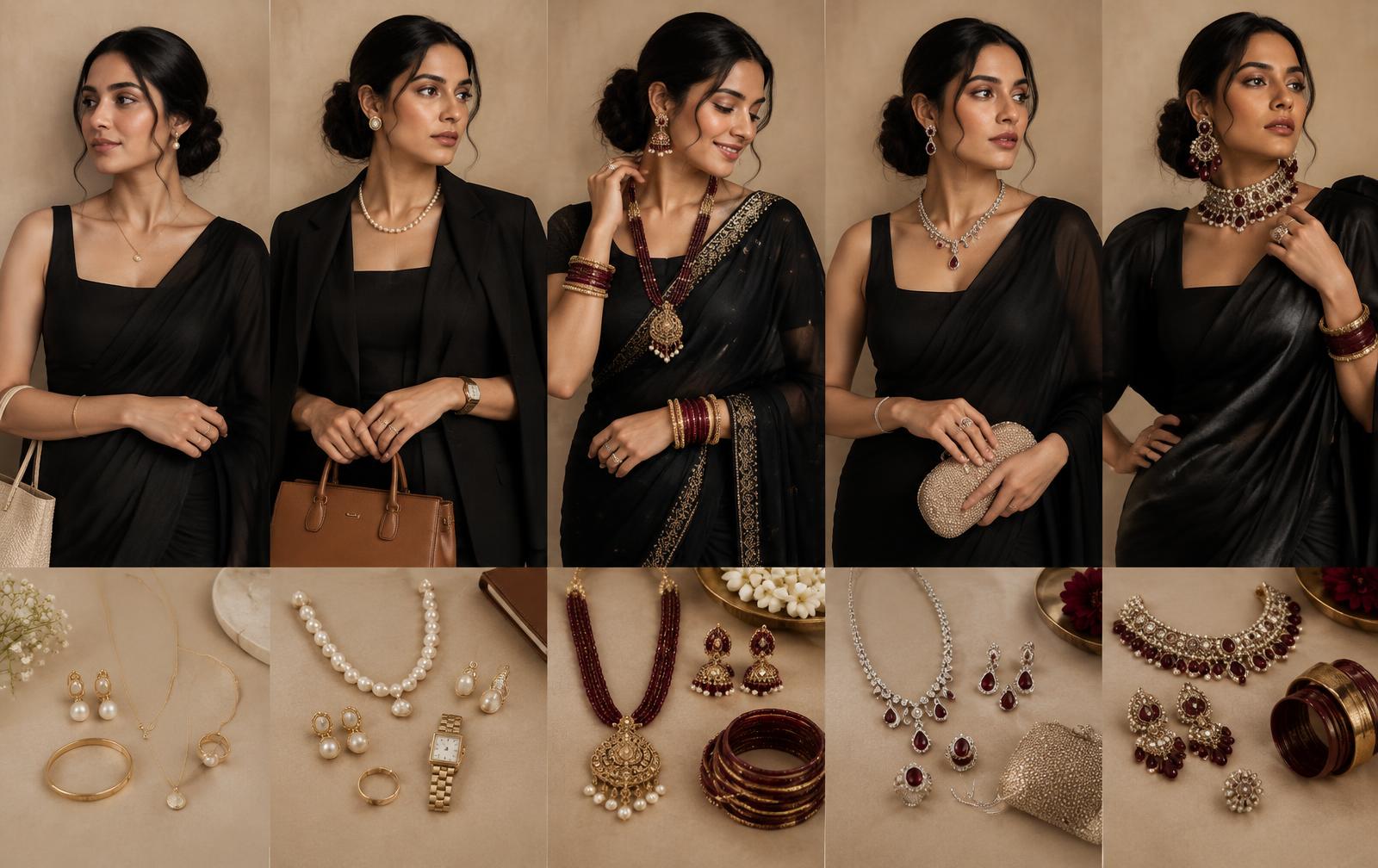
Cool undertones may appear rosy, pink, red or bluish. Silver-tone and cooler grey finishes can feel crisp and harmonious, especially with black, navy, cool pink, berry or clear white clothing. The result can be particularly clean with modern necklines and tailored outfits.
Gold-tone jewellery can still look striking on cool undertones. Consider using one clear gold-tone focal piece, then repeat a warm note in a bag, border or makeup colour. The repetition makes the contrast feel intentional.
Neutral undertones and mixed palettes
Neutral undertones often sit comfortably between warm and cool. Both gold-tone and silver-tone jewellery may feel equally natural, making outfit colour and occasion more useful deciding factors. Mixed-tone pieces can be an effortless option because neither colour needs to dominate.
If your undertone seems to change with the season or you cannot identify it, build from the outfit instead. Repeat one visible detail, such as a warm border or cool buckle, and let that guide the jewellery colour.
Use colour, scale and placement together
Metal colour is only one part of styling. A large necklace creates more colour near the face than a slim ring, while earrings can reflect light close to the eyes. If a tone feels too strong as a necklace, try it in a smaller earring, bracelet or ring before deciding it does not suit you.
Coloured details can also change the relationship. A warm-tone setting with cool-coloured accents, or a silver-tone piece beside maroon fabric, creates a more layered result than metal colour alone suggests.
A personal final test
- Compare jewellery in natural light and in the lighting of your event.
- Try each tone with the actual outfit rather than against bare skin alone.
- Photograph both options from a normal distance to judge the complete look.
- Use undertone advice to find harmony or contrast—not to exclude colours.
- Choose the option that makes your face and outfit feel lively to you.