Buying Guides
How to Measure Your Bangle Size at Home
A well-fitting closed bangle needs to pass over the widest part of your hand while sitting comfortably at the wrist. You can estimate your size at home in two useful ways: measure a bangle that already fits, or measure around your compressed hand. Taking both measurements, when possible, gives you a more confident starting point before ordering.
Before you begin
Bangle sizing is different from bracelet sizing. A closed bangle has no clasp, so it must fit over the knuckles before resting around the wrist. The most important measurement is therefore the widest part of the hand when it is shaped as though you are putting on a bangle—not the wrist alone.
Use a flexible measuring tape, a ruler marked in millimetres, and a piece of non-stretch string or a narrow strip of paper. Measure the hand on which you intend to wear the bangle, because one hand may be slightly larger than the other. Keep your hand relaxed and repeat every measurement at least twice.
Method one: measure an existing bangle
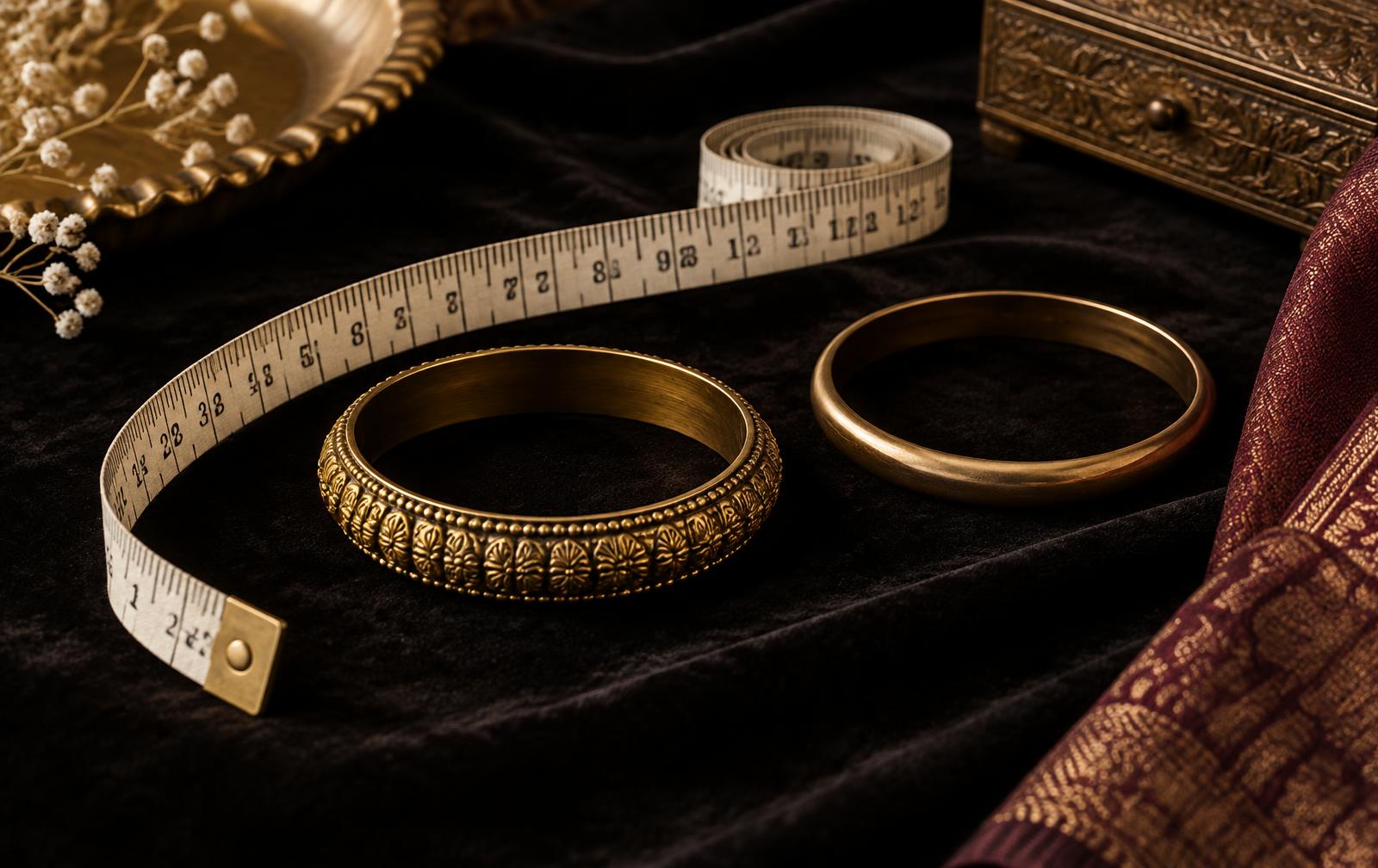
If you own a closed bangle that passes comfortably over your hand, place it flat on a level surface. Measure straight across the inside of the bangle from one inner edge to the opposite inner edge. Do not include the thickness of the bangle itself. This inside measurement is the bangle's internal diameter.
Keep the ruler across the widest central point rather than measuring at an angle. Record the result in millimetres and compare it with the size information shown on the product page. If the existing bangle is oval or slightly misshapen, take two measurements across different directions and use the wider internal diameter as a reference.
Think about how the reference bangle actually feels. If it slides over the hand easily but moves more than you like at the wrist, a slightly smaller option may suit you. If it needs uncomfortable pressure to pass the knuckles, use it only as a minimum reference and consider the next available size.
Method two: measure around your hand
Bring your thumb across your palm toward the base of your little finger, as if you were about to slide on a closed bangle. Keep the fingers together without squeezing so tightly that the hand becomes narrower than it would naturally be while dressing.
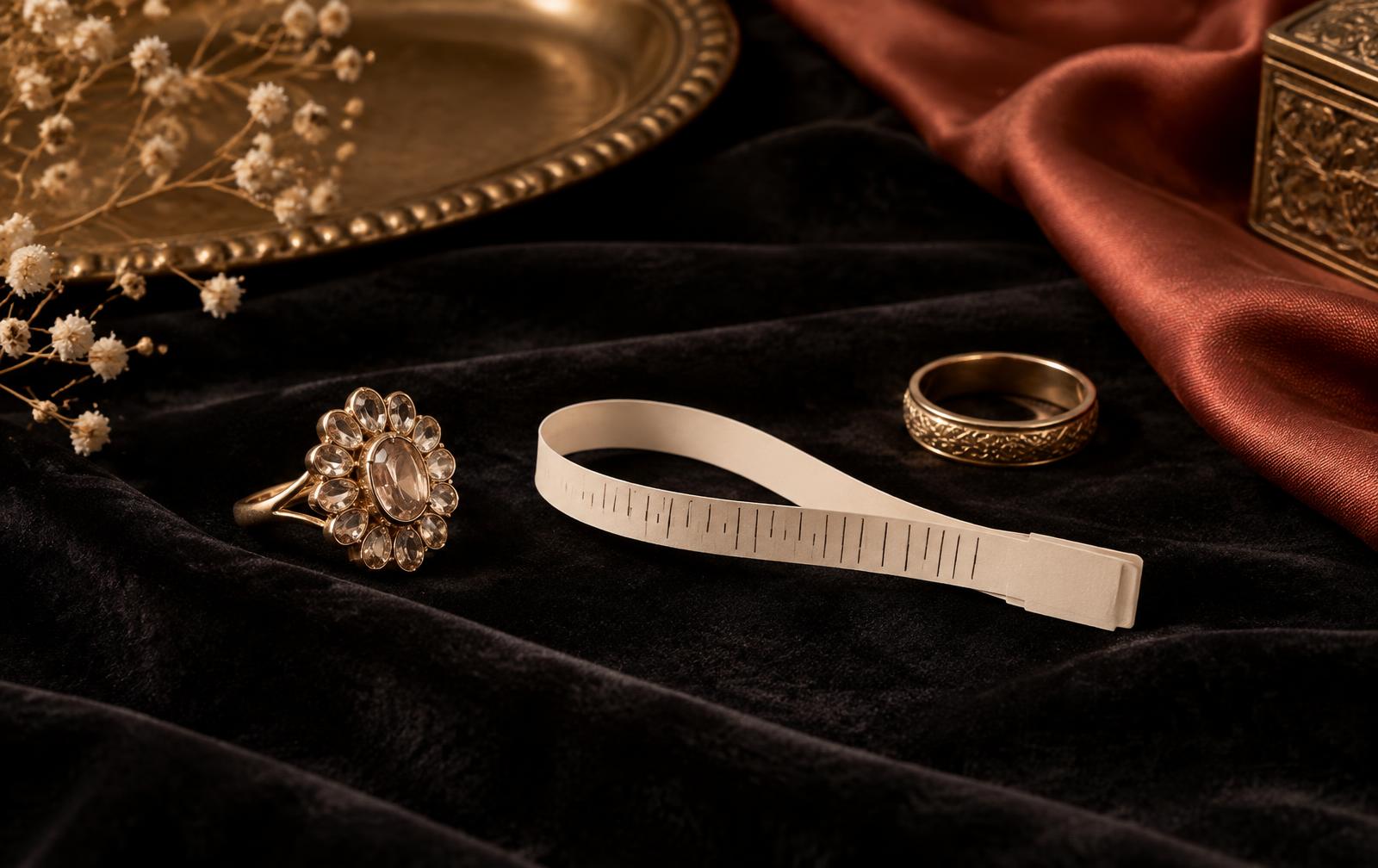
Wrap the flexible tape around the widest part of the hand, usually across the knuckles and around the base of the thumb. The tape should touch the skin without digging in. If you are using string or paper, mark where the ends meet, lay it flat, and measure that length with a ruler. This gives the hand circumference.
Compare that circumference with the sizing guidance supplied for the bangle you are considering. Bangle labels and conversion charts can vary between sellers, so the product's own stated internal diameter or circumference is more useful than relying only on a familiar size name.
How to think about the fit
A comfortable bangle should move over the widest point of the hand with gentle, controlled pressure. Once at the wrist, it should have enough room to move naturally without slipping off the hand when your arm is lowered. The preferred amount of movement is personal: some people like a close fit, while others enjoy a looser stack.
The bangle's width and shape can affect how the same nominal size feels. A broad, rigid bangle may feel closer than a fine one, while several bangles worn together occupy more space and can feel firmer. Hinged or openable styles may follow a different sizing method because they do not have to pass over the knuckles. Always read the individual product details before comparing sizes.
If you are between sizes
When your measurement sits between two available sizes, the larger size is usually the more practical choice for a closed bangle because it still needs to clear the hand. This is particularly helpful if your knuckles are pronounced, your hands sometimes feel puffy, or you prefer an easier on-and-off fit.
The smaller option may suit someone who knows they prefer a close fit and whose hand measurement falls only just above that size. Avoid forcing a bangle over the hand to achieve a neater wrist fit. If you are uncertain, compare the product dimensions with a bangle you can already wear comfortably or ask customer support about the specific design before ordering.
Common measurement mistakes
Measuring only around the wrist is the most common error for a closed bangle. Other mistakes include measuring the outside of an existing bangle, holding the ruler away from the true centre, pulling the tape too tightly around the hand, or using stretchy string that changes length.
It is also easy to mix centimetres, millimetres and traditional size labels. Write down both the number and the unit, and check which measurement the product page uses. Do not assume that all bangles carrying the same size label have identical dimensions, especially when comparing broad, sculpted or unusually shaped designs.
Useful tips for a more reliable result
- Measure the hand two or three times and use the most consistent result.
- Measure later in the day as well as earlier if your hands tend to change slightly in size.
- Use a non-stretch strip and keep it level around the widest part of the hand.
- Compare both internal diameter and hand circumference when the product provides both.
- For a stack, consider the combined width and how much movement you prefer.
- Never force a rigid bangle over the knuckles; choose an easier fit or a style that opens instead.